

In times of uncertainty, such as during the tumultuous period of COVID-19 in 2021, businesses often seek avenues to boost their visibility and attract customers. Yelp, a popular platform for local consumer reviews and business listings, was on our list of things to give a try. However, our experience soon revealed a stark contrast between expectation and reality leading us to re-evaluate the merits of advertising on Yelp. Let’s delve into five compelling reasons why our journey with Yelp led us to caution against its advertising services.
1. Until death do us part
Upon joining Yelp, businesses are ensnared in what can only be described as “vendor lock-in.” In the context of digital platforms like Yelp, vendor lock-in means that once a business signs up and becomes integrated into the platform, it’s challenging to disengage or switch to another platform without facing significant obstacles. Attempting to remove your business becomes an exercise in futility, akin to entrapment. This lack of autonomy is concerning and restricts businesses from making independent decisions about their online presence.
2. Permanently closed
Exiting Yelp is akin to closing your business permanently. However, the platform fails to differentiate between permanently closing your business on Yelp and shuttering it entirely. In other words what the platform is communicating is: If you close your business listing with us, we will display to the world that your business is permanently closed. This miscommunication can mislead potential customers, causing unwarranted damage to your business’s reputation.
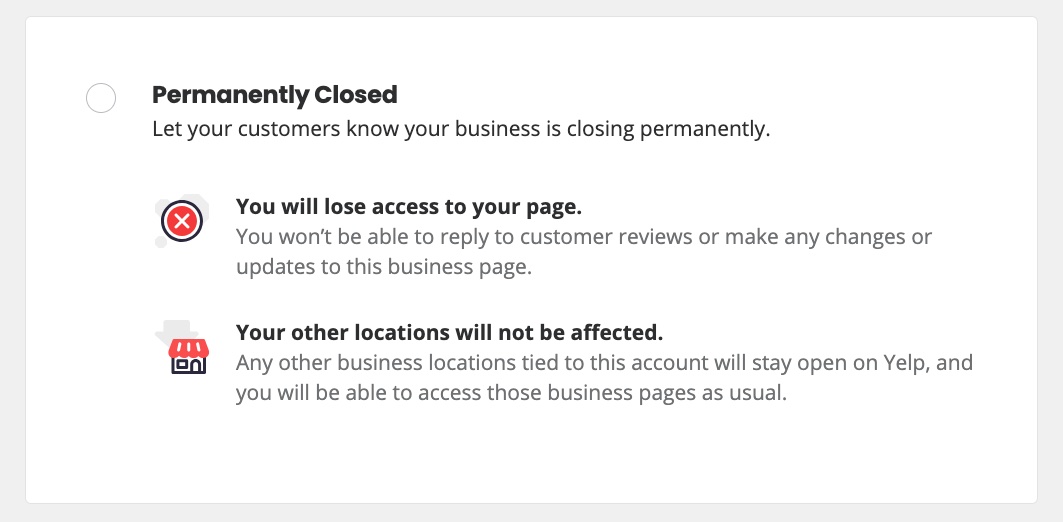
Our attempts to address this issue with Yelp staff were met with resistance and misinformation, as we were erroneously informed that other platforms like Yellow Pages operate in a similar manner. However, upon contacting Yellow Pages, we discovered that they allow businesses to close their accounts without misleading customers about the status of their business. This stark contrast highlights Yelp’s lack of transparency and raises questions about its commitment to fair and respectful treatment of businesses or maybe its staff does not have proper training.
3. Pay or Pay
Yelp’s monopolization of features through paywalls or subscription models severely limits the autonomy of businesses. Paid vendors enjoy preferential treatment, including enhanced visibility and promotional opportunities. This “pay-to-play” system undermines the principles of fair competition and transparency, leaving non-paying businesses at a significant disadvantage in an almost fully controlled system.

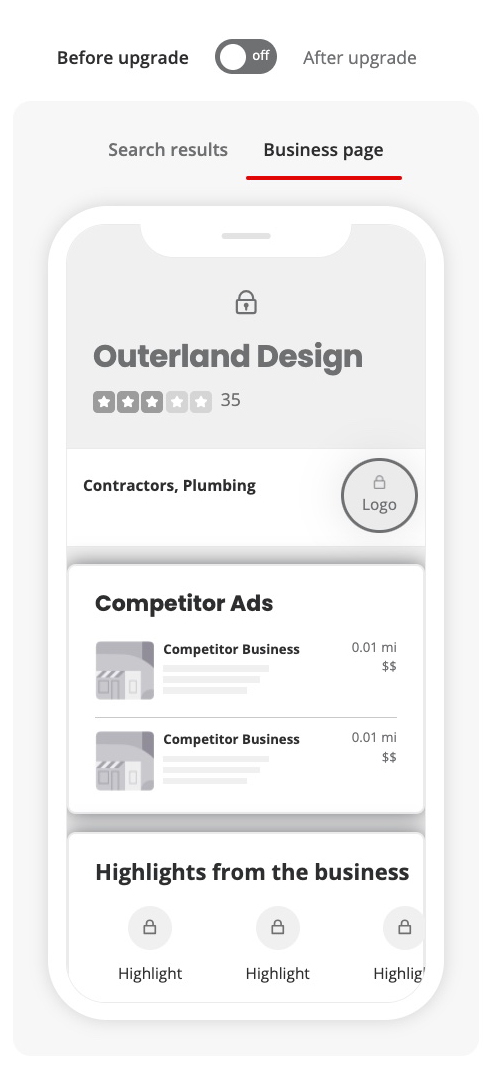
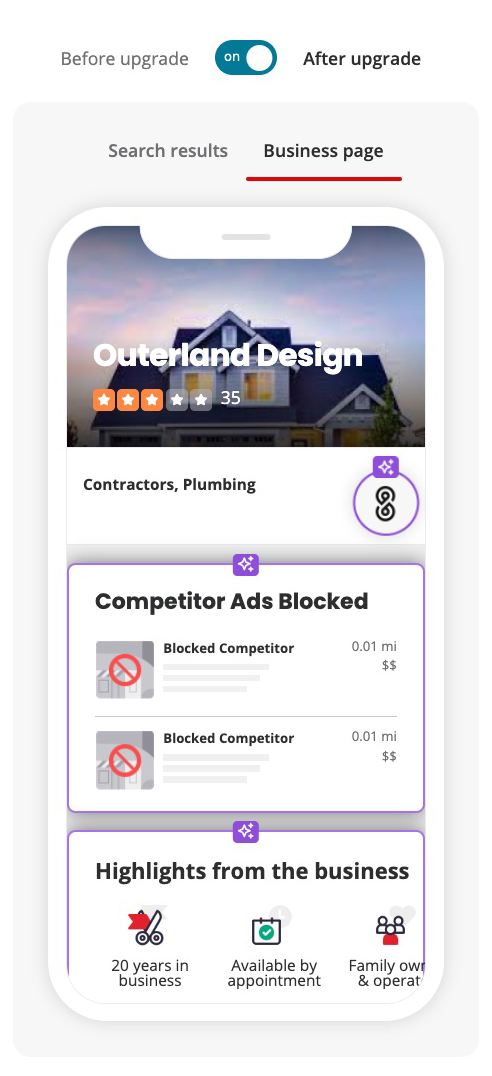
As you can see in the above screenshots for a paid plan you can showcase your logo and highlight your business’s strengths, key features, or positive attributes to create social trust.
Moreover, businesses that opt not to pay not only face reduced visibility but also contend with the unwelcome presence of competitor ads on their pages. This practice further compounds the inequity, reinforcing the adage that there’s no such thing as a free lunch.
Yelp’s ranking system heavily influences which businesses appear at the top of search results. If you choose not to pay for advertising or other promotional services, your business may be ranked lower in search results. For potential clients browsing Yelp, seeing your business ranked low may give the impression that your services are inferior compared to higher-ranked businesses. This can inadvertently communicate to potential clients that you may not provide the best business solutions, simply because of your lower visibility on the platform.” Hence you either pay or pay.
4. Loss of Trust
Biased or manipulated search results erode trust in Yelp’s platform and the businesses listed on it. When potential customers perceive search results as unreliable or biased, they’re less likely to trust the platform or engage with businesses listed on it. This loss of trust can have detrimental effects on a business’s reputation and bottom line.
5. Poor Customer Service
If the origin of the brand name “Yelp” stems from the amalgamation of “Yellow Pages” and “Help,” then its very essence should serve as a beacon for exemplary customer service. However, Yelp’s lack of responsiveness and inadequate customer support further compound the issues businesses face on the platform. Effective customer support should serve as a feedback loop for improvement and facilitate iterative enhancements to the user experience. Yelp’s failure to address customer concerns reflects poorly on the platform and undermines its credibility.
In Conclusion
Our experience with Yelp’s advertising services has been rife with challenges and disappointments. From vendor lock-in to biased search results and poor customer service, the platform falls short of meeting the needs and expectations of businesses. As we continue to navigate the ever-evolving landscape of digital marketing, it’s essential to carefully evaluate the platforms we choose to invest our time and resources in. While Yelp may offer visibility, the trade-offs in terms of autonomy, trust, and customer support are too significant to ignore. As businesses, we must prioritize platforms that prioritize our success and align with our values.